 By
Match-3 games are puzzle games where you swap two neighboring pieces on a grid to line up three or more of the same kind. The matched pieces disappear, new ones fall in from above, and levels usually ask you to reach a goal before you run out of moves or time. The pieces are often gems, candies or fruit, but the rules underneath stay the same.
How a match-3 game works
Match-3 games repeat one short loop on every turn:
- Find a swap. You exchange two pieces that sit side by side or one above the other.
- Make a match. Three or more identical pieces in a row or a column clear from the board. In Bejeweled, a swap that makes no line of three snaps back.
- Let the pieces fall. The pieces above drop into the gap, and new ones fill the board from the top.
- Watch for cascades. If the falling pieces form new lines, those clear too. These chain reactions are called cascades.
- Repeat until you reach the level's goal or run out of moves.
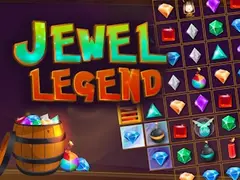
Jewel Legend is a typical example: you match gems across 100 levels, build combos and set off explosive power-ups while aiming for three-star ratings.
Special pieces and boosters
Matches bigger than three usually create a special piece that stays on the board until you use it. The rules change from game to game, but this pattern is common:
| Match you make | What it usually creates | Typical effect |
|---|---|---|
| 3 in a line | Nothing extra | Clears the three pieces |
| 4 in a line | A line-clearing piece | Clears a whole row or column |
| L or T shape | A bomb | Clears the pieces around it |
| 5 in a line | A color-clearing piece | Clears every piece of one color |
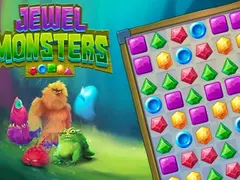
Games add their own twist. In Tasty Jewel, you swap fruits instead of gems and unlock special jewels as you clear its 16 levels. In Jewel Monsters, your matches become attacks on monsters, and you have to keep your health up while you fight.
Boosters are separate tools you use from outside the board, such as a shuffle or a hammer.
Level goals
Before 2012, most tile-matching games had no end goal: you scored as many points as you could until no moves were left. Since then, many match-3 games have split play into short levels, each with its own target and a fixed number of moves. Common goals include:
- reaching a target score
- clearing blockers such as ice, wood or jelly
- collecting a set number of one kind of piece
- bringing items down to the bottom of the board
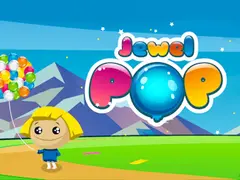
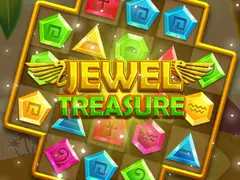
In Jewel Pop, you match balloons and shatter barriers in time-bound levels, so you have to plan quickly. Jewel Treasure offers both crafted puzzles and an endless mode.
A short history of match-3
- 1994: Shariki. Russian developer Eugene Alemzhin wrote Shariki for MS-DOS. Players swapped neighboring balls to make lines of three of the same color. It is regarded as the first match-3 game.
- 2000: Bejeweled. PopCap Games first released it in 2000 as a browser game called Diamond Mine, and it took the name Bejeweled when it moved to MSN Games. It is credited with making match-3 popular and with helping to launch the casual games industry.
- 2012: Candy Crush Saga. King released it in 2012, and in 2013 it became the most-played game on Facebook. It established the format of short levels with goals and a limited number of moves.
Match-3 vs tile-matching games
Strictly speaking, match-3 is one kind of tile-matching game. The broad genre covers any puzzle where you clear tiles by matching them. In everyday use, though, "tile matching" usually means games where you pick tiles from a fixed layout instead of swapping them on a grid.
| Match-3 | Tile matching (pick and pair) | |
|---|---|---|
| How you move | Swap two neighboring pieces | Tap a free tile to pick it |
| Board | A grid that refills from the top | A fixed layout that empties |
| What counts as a match | 3 or more in a row or column | A pair, or 3 identical tiles in a tray |
| Main goal | A level goal in limited moves | Clear every tile |
| Examples | Jewel Legend, Tasty Jewel | Mahjong solitaire, Tile Fruits |
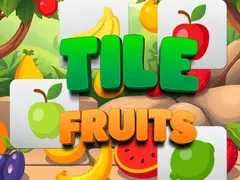
Triple-tile games show the difference. You tap tiles that nothing covers, each tile drops into a tray at the bottom, and three identical tiles in the tray vanish. The tray is small, so careless picks can fill it. In Tile Fruits, a 2D tile-matching game, you match three identical fruits to clear each level and must plan your moves around a seven-fruit limit. Mahjong solitaire uses pairs instead, as our mahjong solitaire rules explain.
Where to start
Begin with a game that explains its level goals clearly and gives plenty of moves, then move on to games with blockers and tighter move limits. For strategy that helps on harder levels, such as reading the goal first and matching low on the board, see Match-3 Tips: How to Beat Hard Levels. You can try these games in the match-3 games category on Gameziko.
Frequently asked questions
What does match-3 mean?
Match-3 describes a puzzle game where you line up three or more identical pieces in a row or column to clear them from the board. In most match-3 games you make each match by swapping two neighboring pieces, and new pieces fall in from above to fill the gaps.
What was the first match-3 game?
Shariki, written in 1994 for MS-DOS by Russian developer Eugene Alemzhin, is regarded as the first match-3 game. Players swapped neighboring balls to make lines of three of the same color. Bejeweled, which PopCap Games first released as a browser game in 2000, later made match-3 games popular.
Is mahjong solitaire a match-3 game?
No. Mahjong solitaire is a tile-matching game, but it is not a match-3 game. Players remove pairs of identical free tiles from a stacked layout, and no new tiles fall onto the board. In a match-3 game, players swap neighboring pieces to make lines of three, and the board refills after every match.
Are match-3 games free to play online?
Yes. The match-3 games on Gameziko are free HTML5 games that run in a web browser with no download and no account. After you press Play now, a match-3 game loads in your browser, although some games show an ad first or take up to 20 seconds to start.